
Faisal Al-Mutairi
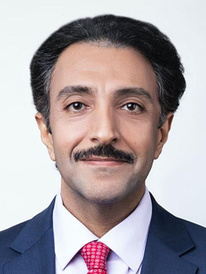
Institution: International Diplomatic Union
Period of stay: 28 September 2026 - 17 September 2027
Contact: dr.faisal@un-idu.org
Profile:
Faisal Al-Mutairi is a Saudi legal researcher with a background in public and international law. He holds a Bachelor’s degree in Law and a Master’s degree in Public Law. His principal research interests lie in public international law and international humanitarian law (IHL), with particular emphasis on the application and development of IHL in contemporary armed conflicts.
His research at the Lauterpacht Centre for International Law focuses on developing international humanitarian law mechanisms to address current challenges in the Middle East. His work examines contemporary patterns of armed conflict, including the role of non-State armed groups, questions of attribution and State responsibility, accountability for violations of international law, and the legal challenges posed by emerging technologies and evolving methods of warfare.
His broader interests include the protection of civilians during armed conflict, the relationship between States and non-State actors, and the development of international legal mechanisms capable of responding effectively to emerging challenges while preserving the fundamental principles of international humanitarian law and public international law.
Research Area:
Developing International Humanitarian Law Mechanisms to Address Contemporary Challenges in the Middle East My research examines how international humanitarian law (IHL) can respond more effectively to the evolving nature of armed conflicts in the Middle East. It focuses particularly on non-State armed groups, State responsibility and attribution, accountability for violations of international law, the protection of civilians, and the legal challenges posed by emerging technologies and changing methods of warfare. The research seeks to identify gaps in existing legal frameworks and explore ways to strengthen the application and effectiveness of IHL in contemporary armed conflicts.
Research Title:
The Mosaic Doctrine and International Humanitarian Law: Asymmetric Warfare and Transboundary State Responsibility in the Middle East (2020–2026)
Research Outline:
The foundational attribution standards of international humanitarian law — most critically the “effective control” test established in Nicaragua and codified in the ILC Articles on State Responsibility — presuppose hierarchical command structures in which specific orders can be traced to identifiable decision-makers. Contemporary asymmetric conflict in the Middle East has rendered this presupposition obsolete. Decentralised, ideologically-bound armed networks — operating under what this research terms the “Mosaic Doctrine” — deliberately distribute command authority across autonomous nodes capable of independent activation. The result is a systematic accountability gap: equivalent operational harm is generated, but no single actor satisfies the existing threshold of direct control. Neutral neighbouring states, including GCC members, have sustained documented transboundary harm for which current frameworks offer no adequate remedy.
Information contained in these profiles is provided by visitors at the time of their stay. The accuracy of the content and links is not guaranteed.